Mid-Summer News
Hope everyone is enjoying the summer! We certainly are!

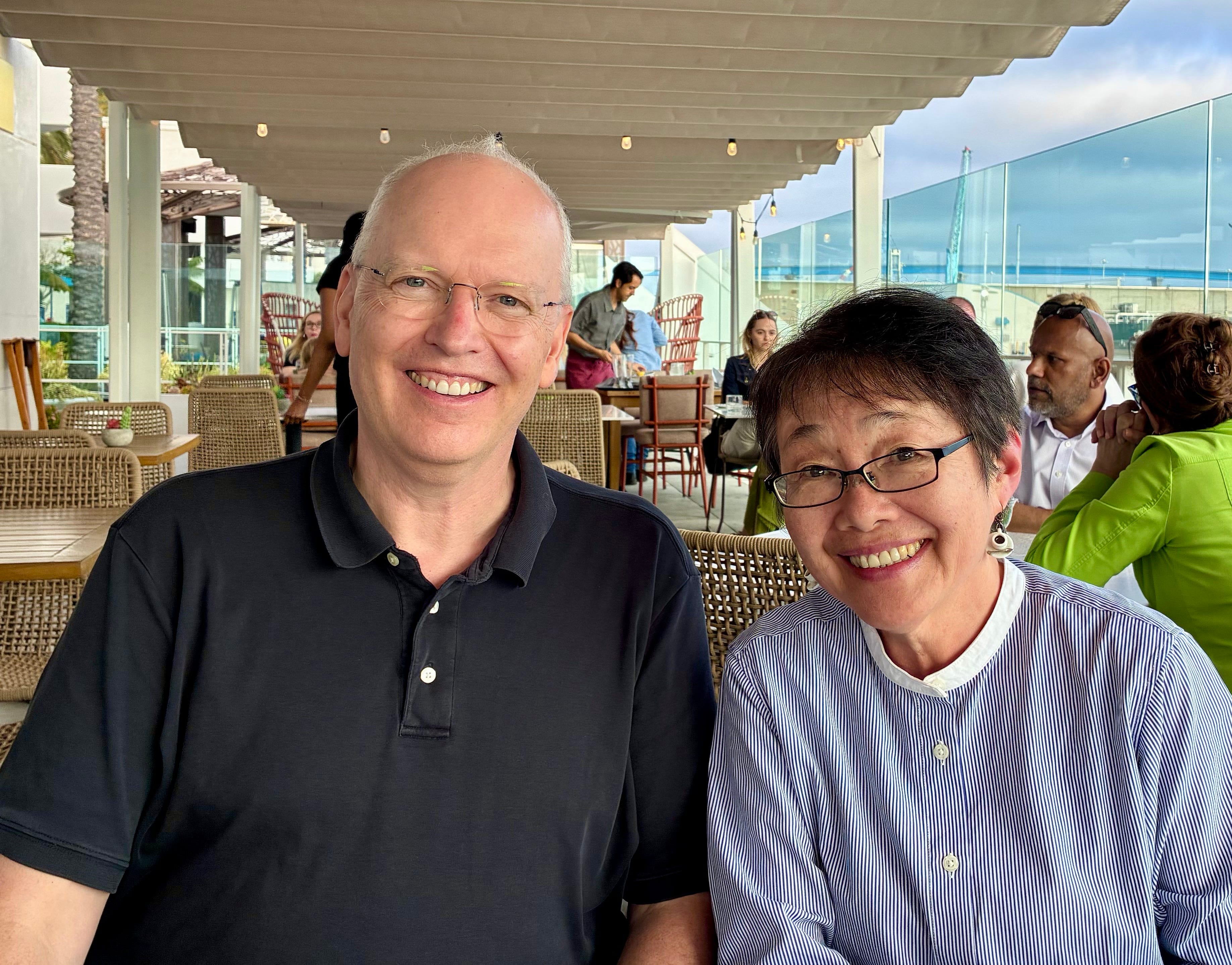
Technically, both Phil and Junko are in the summer hiatus.
But that did not stop them from meeting up in San Diego, attending the Automated Transportation Symposium (ATS), and soaking in what various stakeholders in the AV ecosystem—regulators, city and state officials, AV technology developers, investors, attorneys, scholars—had to say about the state of autonomous vehicles.
The symposium hosted by SAE International offered multi-dimensional views on AVs, their technology advancements, and AV operations already proceeding on the ground. It has given us plenty of fodder in planning the Season 2 of “Phil & Junko on AV Safety,” scheduled to roll out in September.
Junko put together a few of her thoughts on the event (this was her first ATS) in her piece “AV Is No Longer about Car Crashes. It’s About Behaving” on Junko’s Tech Probe Substack.
Podcast appearances:
Phil and Junko, each enjoyed being guests to AV-related podcasts last month.
Phil on The Center for Auto Safety’s podcast “There Auto Be A Law”: https://www.autosafety.org/podcast/edge-cases-with-phil-koopman/
Phil discusses edge cases, remote assistants, robotaxi fixes that didn’t actually work, and how NHTSA has declared that safety includes things other than crash rates.
Junko on The Driverless Digest podcast with Harry Campbell:
Junko and Harry discuss “Rethinking AV Safety as Robotaxis Scale.”
Mid-Summer pointers of note:
While in hiatus, we’re keeping an eye on developments in the AV safety world. Here are some links you might find of interest.
NHTSA is cracking down on AVs interfering with emergency responders. “To state it bluntly: an AV that cannot safely interact with first responders is a danger to the general public.” Everyone in the AV industry needs to read Administrator Morrison’s brief letter on this topic.
NHTSA is working to establish driving tests for autonomous vehicles by 2028 based on “behavioral competencies.”
NHTSA has launched an Automated Vehicle Safety portal.
A New Jersey bill would outlaw single-sensor-type robotaxis, such as Tesla’s camera-only approach.
An Op Ed in the San Francisco Examiner argues that robotaxis should self-report major traffic violations to regulators — even if police don’t catch them in the act.
Zoox software recall for driving into heavy smoke at a fire scene.
The discussion about robotaxi safety in New York City continues, with one piece arguing “comparing robotaxis to the for-hire fleet they would most likely replace.”
Tesla has now had three crashes involving remote operators driving the vehicle, with crash speeds up to 9 mph into fixed obstacles.
IIHS has published a study showing that, based on SGO reports, robotaxis have a lower crash rate than humans for police-reportable crashes. However, the scope of the study is limited. “Those are encouraging signs for the future of driverless vehicles,” said Eric Teoh, IIHS director of statistical services and lead author of the study. “Now we need to get the data collection system right, so that we can ensure that level of safety continues as these technologies become more prevalent.” (Our commentary: This is indeed encouraging. However, too many headlines are overlooking that there is more to safety than injury crash rates, and not nearly enough data to know how fatality rates will turn out.)
A Waymo robotaxi was involved in a severe multi-injury crash. Initial reports suggest another vehicle hit the robotaxi, but the details are still pending.
Waymo has restarted freeway operations, initially in Phoenix.
San Francisco’s Department of Emergency Management revealed some of what went on in their power outage, including 31 calls to Waymo (one city dispatcher was kept on hold by Waymo for nearly an hour), an extended ambulance delay, and blocked fire trucks — including blocking a fire truck responding to the PG&E substation that triggered the blackout. More in this piece on 4th of July attempted improvements by Waymo, such as providing an embedded contact to the city, but continued problems.
Zoox has been granted an FMVSS exemption to deploy vehicles without a steering wheel and other manual controls. We’ll have to see how it works out the first time an emergency responder has to move a vehicle out of the way.